Today, we are releasing Hyvor Blogs 2.0. It comes with a bunch of new features. Most importantly, Hyvor Blogs is now open-source and can be self-hosted.
Here’s a summary of all the major changes:
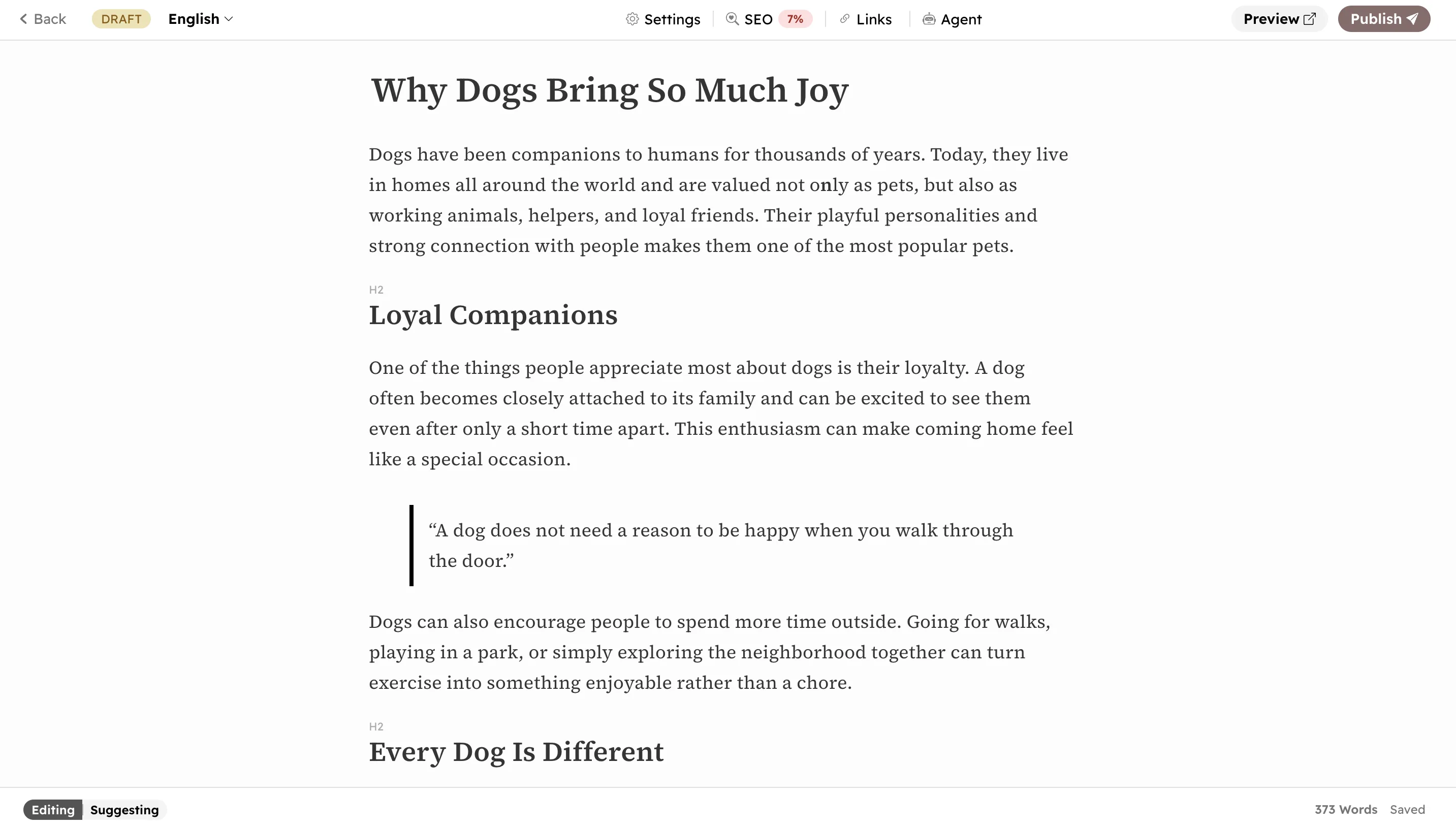
New Editor UI
We have a new, improved editor user interface that promotes simplicity and helps you write without distractions.
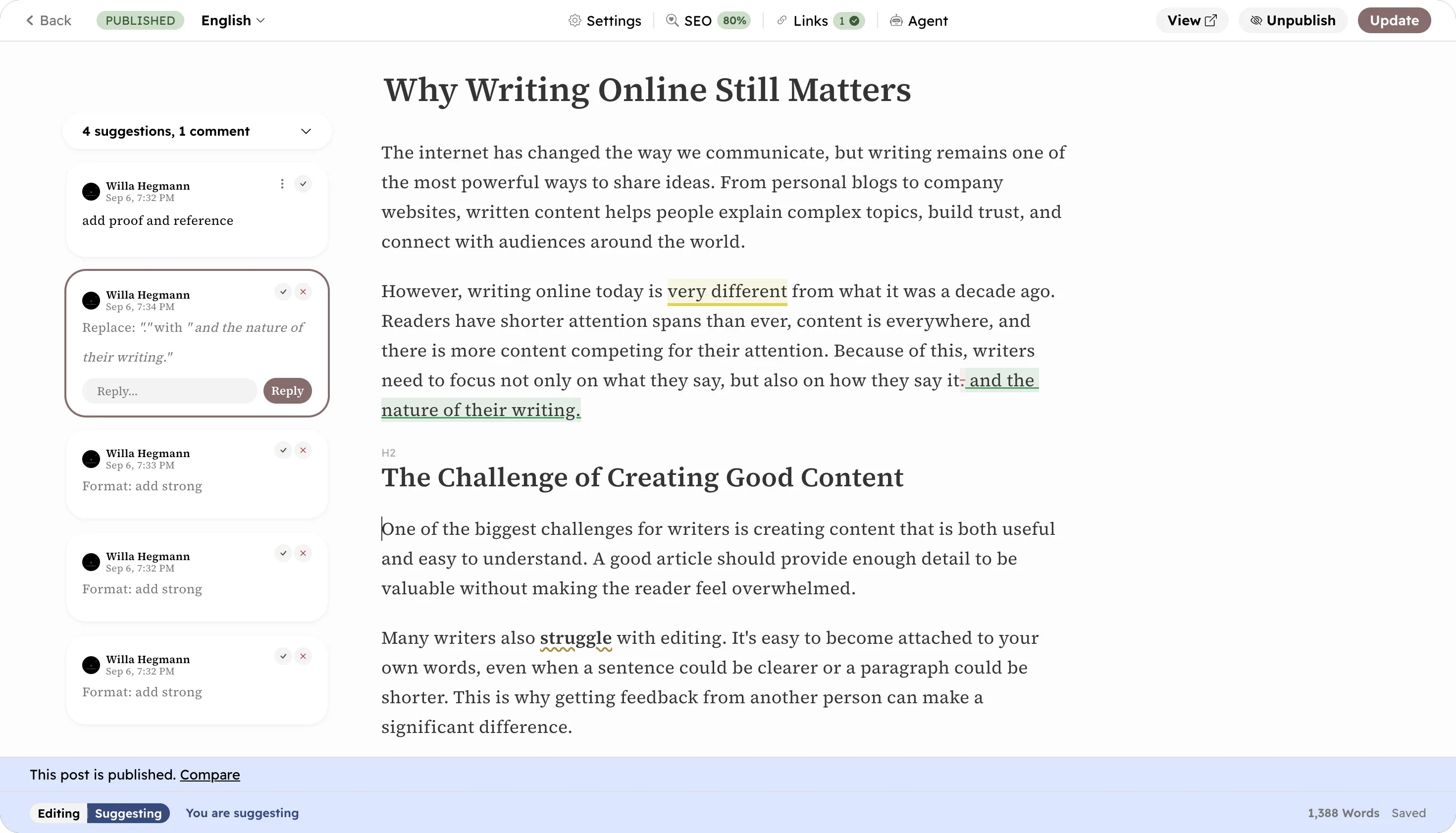
Suggestion Mode
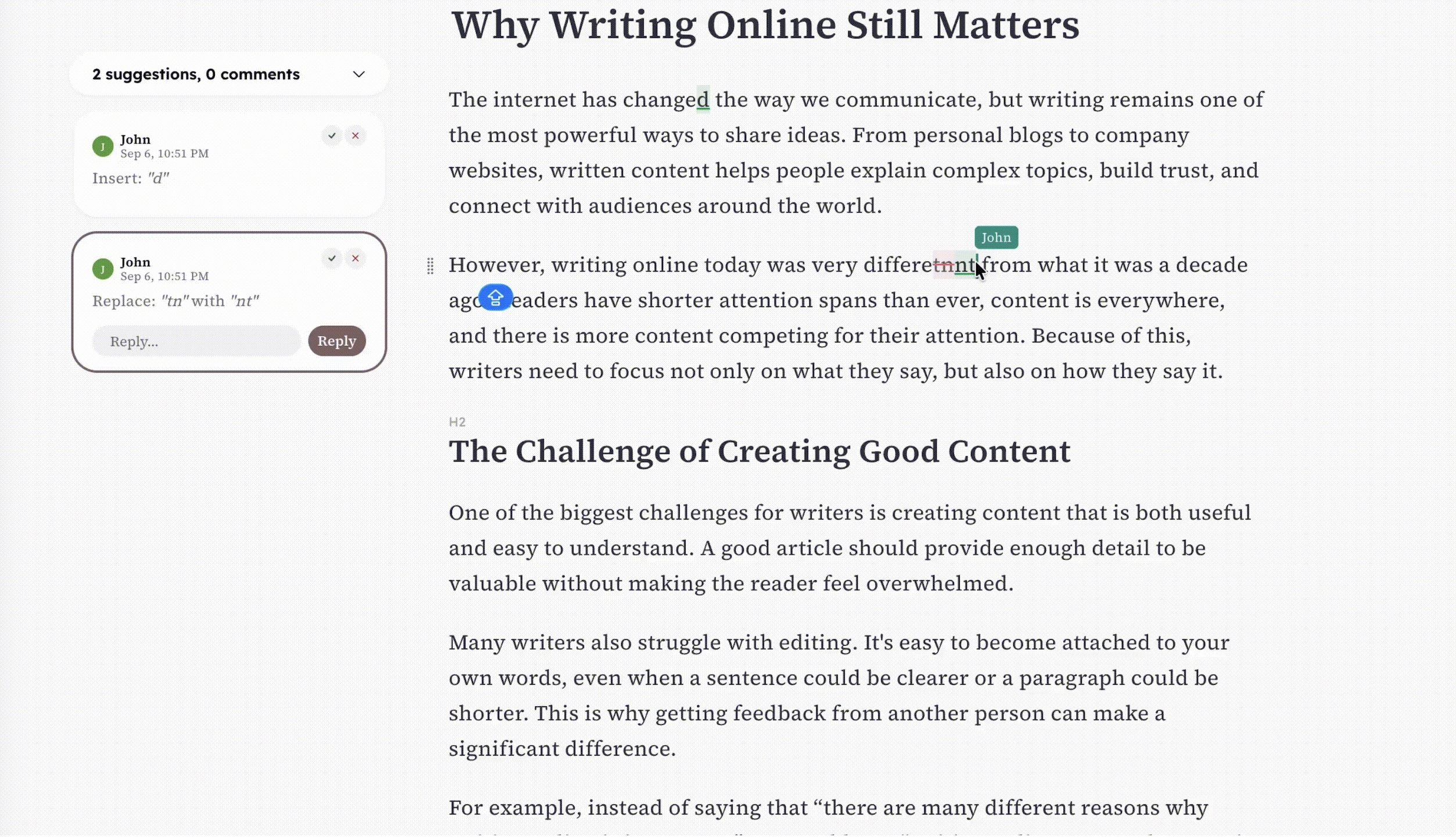
The editor now offers a suggestion mode. When you are collaborating with your team, it’s often useful to give feedback in a traceable way. Suggestions help with that.
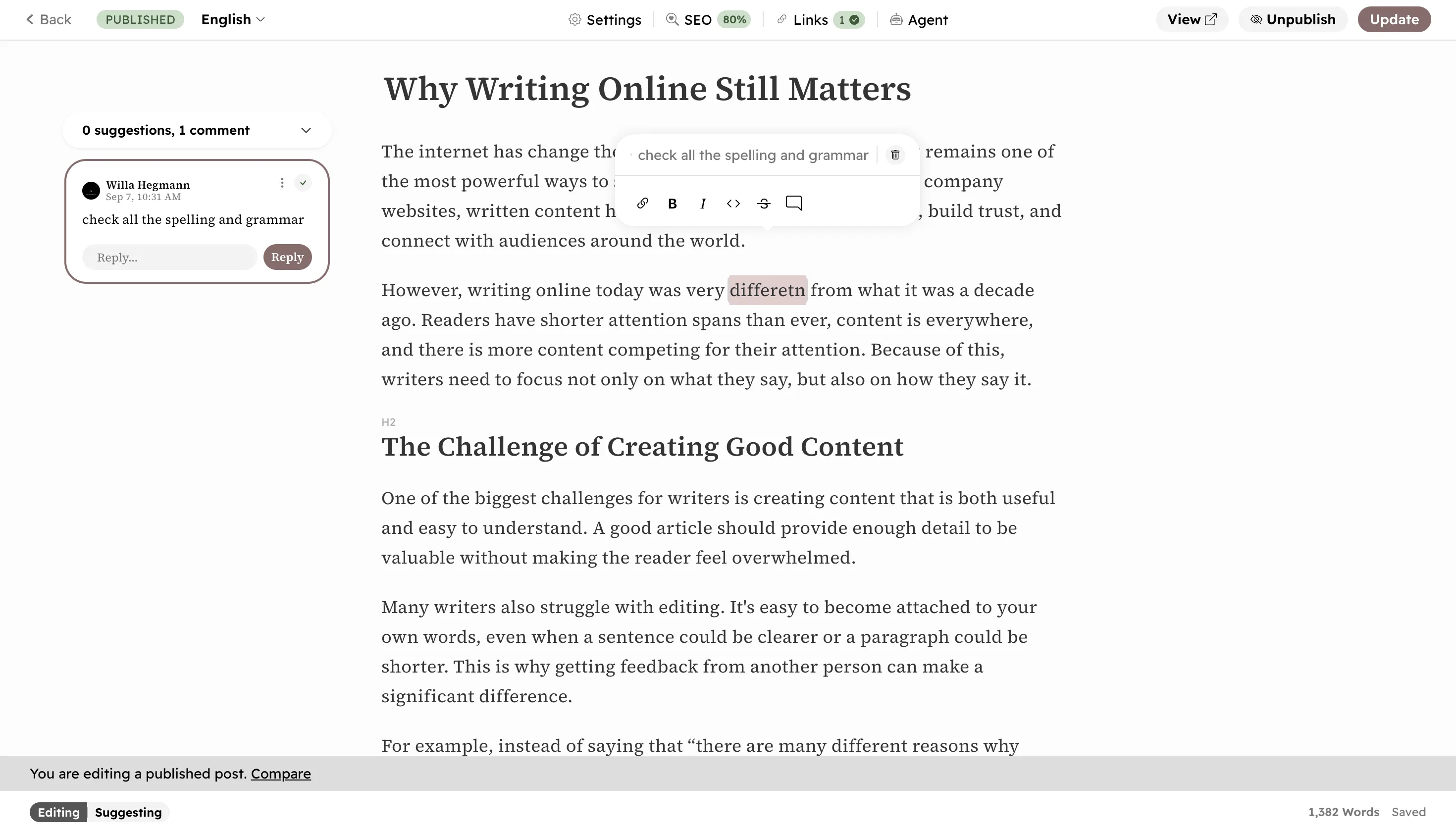
Along with this, we have also introduced Comments. You can comment on a piece of text:
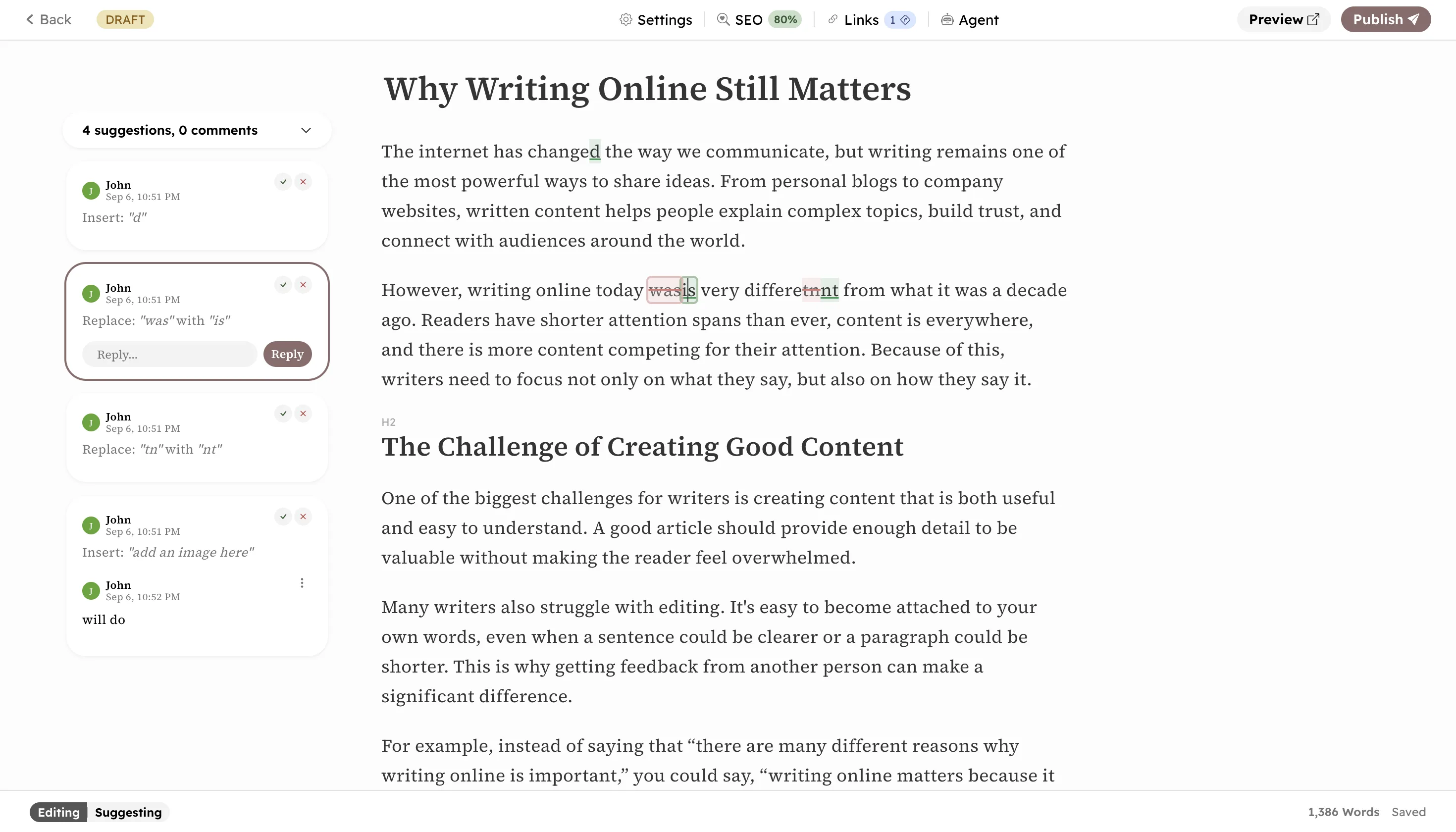
And your team members can offer their feedback to your suggestions & comments:
Real-time Collaborative Editing
Previously, only one author could work on a document at a time. Now, multiple authors can work on the same document in real time. This is another feature targeted towards teams to make collaboration easy.
AI Agent
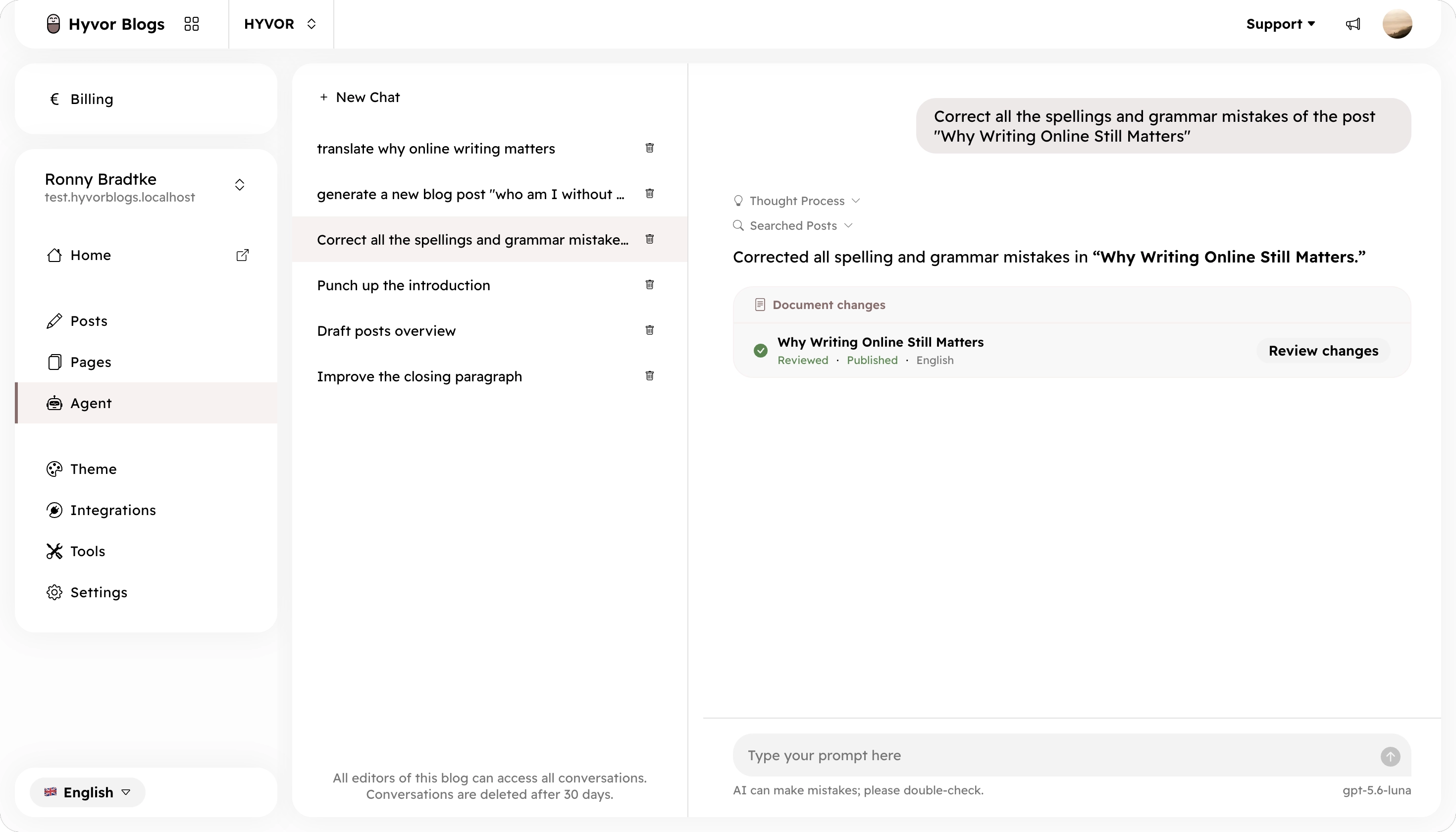
Previously, we had a simple AI feature to generate content. With 2.0, we have a full AI agent that can read and search your blog posts, compare them, improve them, and even suggest edits to them. Learn more about the AI agent.
Improved Hyvor Talk Integration
We have made a couple of changes to our Hyvor Talk integration:
User access is now automatically synced from Hyvor Blogs to Hyvor Talk.
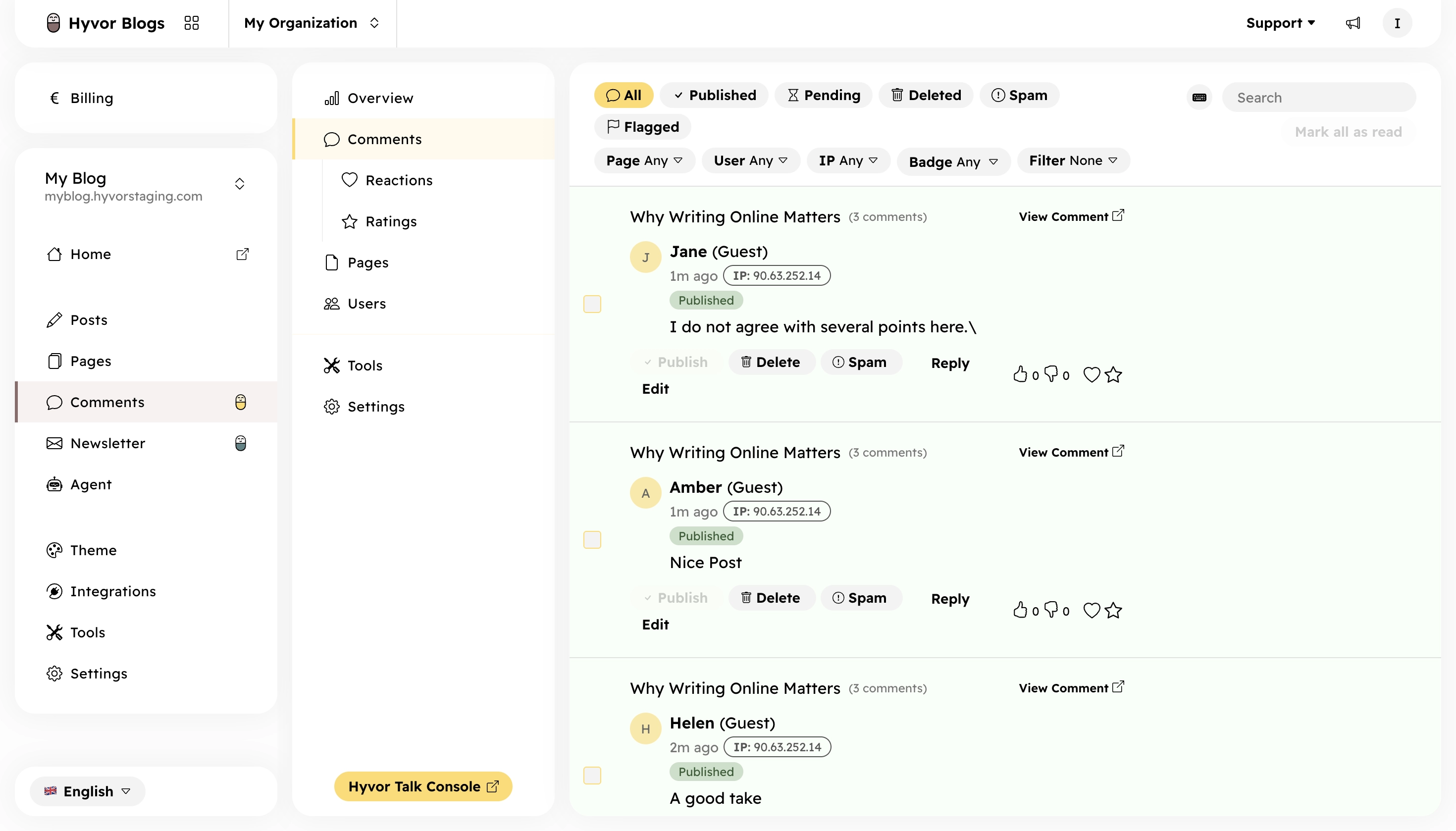
When Hyvor Talk is connected to a blog, you can moderate comments directly within the Hyvor Blogs Console - no need to open Hyvor Talk separately.
Previously, we only allowed you to use Hyvor Talk for free on your Hyvor Blogs blog. Now, we offer a complimentary Hyvor Talk license for the organization if it has an active Hyvor Blogs subscription.
Learn more about the Hyvor Talk Integration.
Hyvor Post Integration
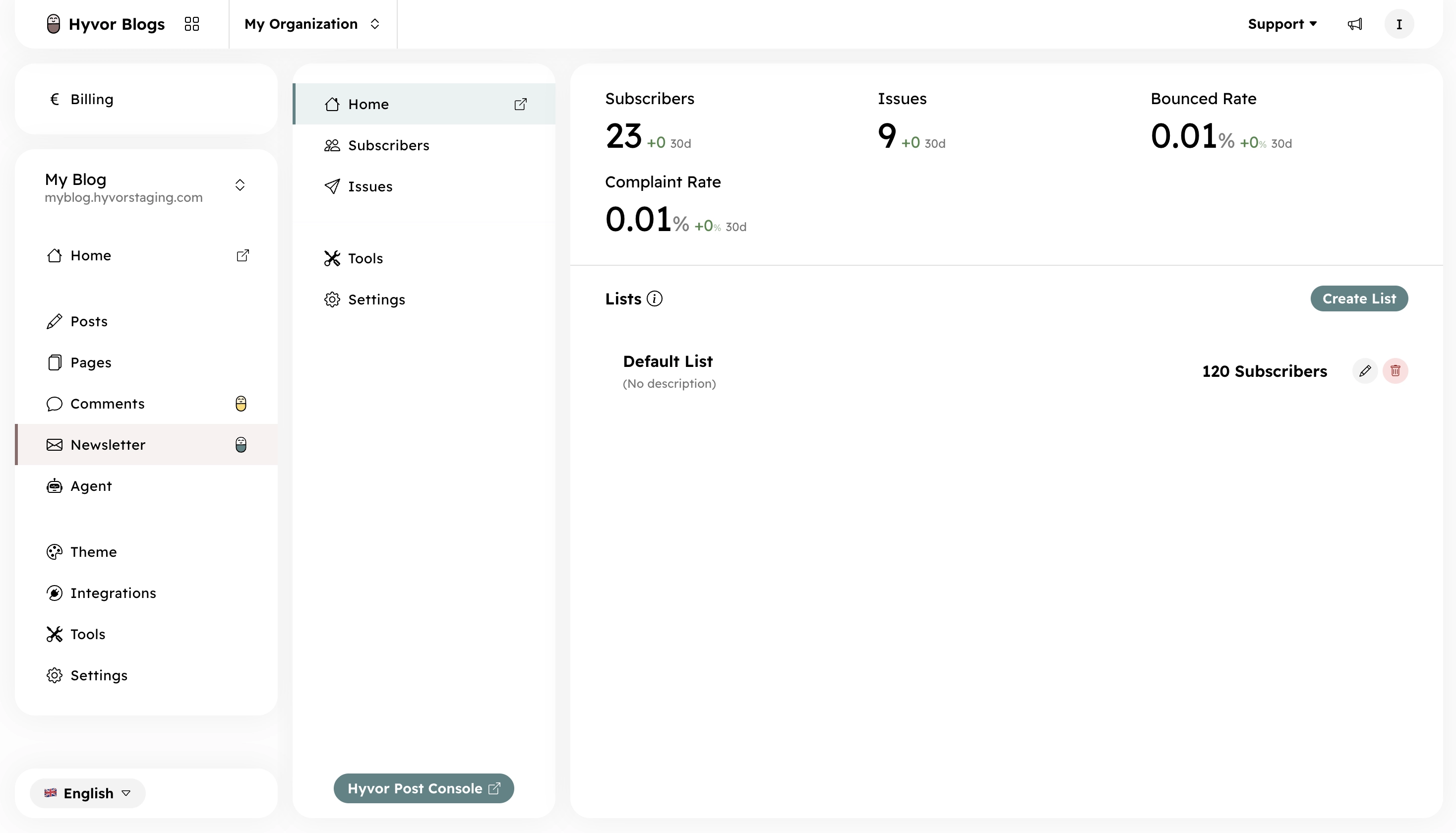
We released Hyvor Post, our privacy-first newsletter platform, last year. It’s now available for free for Hyvor Blogs customers as a direct integration.
Add a subscriber signup form to your blog
Manage newsletters and send issues directly from the Hyvor Blogs Console.
Open-source & self-hosting
Hyvor Blogs is now open-source under the AGPLv3 license. You can self-host on your own servers using Docker.
Where Hyvor Blogs Stands
I just want to remark on where Hyvor Blogs stands compared to other self-hostable blogging engines and platforms:
Hyvor Blogs is more focused on blogging and is lighter than a general CMS like WordPress, Drupal, or Joomla.
Hyvor Blogs is comparable to Ghost, but is more of a platform where you can run multiple blogs in one instance compared to one-instance-per-blog in Ghost.
Hyvor Blogs provides headless CMS features (aka, Data API) but has a much simpler, blogging-focused API than Strapi, Payload CMS, and similar headless CMSes.
Hyvor Blogs is not a text-based blog engine like Hugo or Jekyll, and is focused on rich-editor-based writing.
Hyvor Blogs' Architecture
It's a traditional web app with a simple architecture - nothing fancy. The frontend is written in TypeScript, SvelteKit, and our design system. The backend is written in Symfony (until recently it was written in Laravel; we migrated to Symfony - story for another time).
The database is Postgres, and media is saved in the filesystem (for smaller deployments) and supports S3-compatible storage for larger deployments.
We use first-request caching extensively. When a blog page is requested, we render the page and cache it, and then the cache delivers all subsequent requests until the cache is cleared.
Personal Plan
We are also introducing a new personal plan priced at €50/year. Check it out on our pricing page.
We hope you enjoy Hyvor Blogs 2.0. If you have any feedback, please feel free to share!

Comments